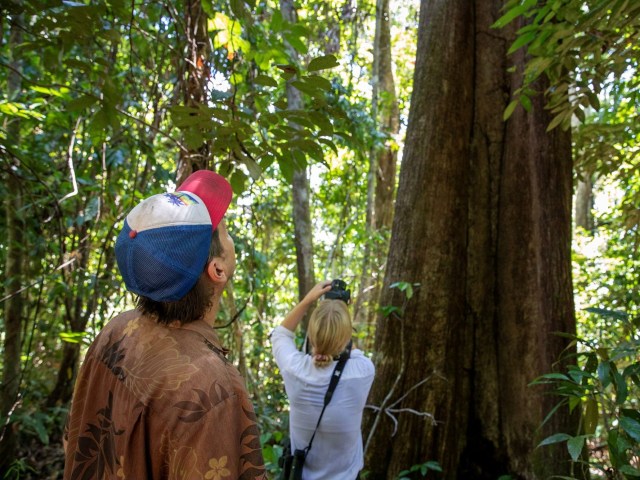
Workers installing solar panels on a rooftop

The Inter IKEA Group Sustainability Due Diligence Policy

Introduction

Inter IKEA Group1 is committed to sustainability due diligence – the process through which we identify, prevent, mitigate and account for how we address potential and actual negative impacts on human rights and the environment. This policy has been informed by international standards and guidelines (e.g. the Organisation for Economic Co-operation and Development and the United Nations Guiding Principles on Business and Human Rights), as well as national legislation  and other international conventions.

Our due diligence process

The Inter IKEA Group approach to sustainability due diligence is an ongoing process designed to identify and address potential and actual negative impacts on people and the environment in our own operations and across the IKEA value chain. We monitor the effectiveness of our due diligence process and related Inter IKEA Group policy regularly in accordance with legal requirements and conduct updates at least every 24 months or whenever there are reasonable grounds to believe that new or increased risks may arise.

Our sustainability due diligence process is intended to:


  • embed responsible business conduct into policies and management systems.
  • identify and assess potential and actual negative impacts in our own operations, value chains and business relationships.
  • work towards ceasing, preventing or mitigating impacts.
  • track the implementation and results of our efforts.
  • provide for, or co-operate in, remediation.
  • communicate about our efforts. 
  • Inter IKEA Group has three steering documents that set out requirements for human rights and environmental matters across its value chain.
  • A. Potential negative impacts

    Potential negative impacts are identified through the IWAY System.

    IWAY ensures sustainability impacts, including human rights and environmental risks, are identified and managed before and during supply operations. Potential suppliers are assessed against social and environmental criteria. IWAY applies to both indirect and direct procurement, starting with supplier evaluation, covering every step of the purchasing and supplier management process and ending when the relationship concludes. We use steering documents and tools to ensure IWAY is implemented. To learn more about IWAY, please visit the IWAY – the IKEA Supplier Code of Conduct web page.

    B. Actual negative impacts

    Actual negative impacts and non-compliance with IWAY requirements are identified through:

    • Supplier and supply chain visits by Inter IKEA Group co-workers.
    • Sustainability audits – performed by Inter IKEA Group, external third-party companies, authorities and others.
    • Assessments and spot checks performed by e.g. NGOs, authorities, media.
    • Reports of (potential) misconduct, either by direct contact with one of Inter IKEA Group co-workers or through our grievance mechanism.

    C. Prioritised sustainability risks
     
    Through our comprehensive sustainability work, Inter IKEA Group employs a systematic risk assessment methodology to identify, assess and prioritise risks across our upstream value chain. This approach ensures that we address potential negative impacts effectively, based on likelihood and severity. Our methodology is applied at multiple levels, including:

    1. Internal assessments: Conducted from a Business Unit (BU) and Product Lead Supply Operations (PLSO) perspective to provide insights into potential risks within our own operations.
    2. Sourcing market analysis: Utilising resources such as Best Buy principles and Maplecroft indices, we examine risks specific to each sourcing market to tailor our strategies accordingly.
    3. Industry and supply chain evaluations: We apply the latest sustainability risk methods and indices, including those from Maplecroft, to understand broader industry and supply chain risks. This helps us remain proactive and informed on emerging challenges.
    4. Individual supplier assessments: Through our IWAY System, we perform detailed evaluations of individual suppliers to ensure compliance with our sustainability expectations.

    The output from these risk assessments guides us in prioritising areas that require attention and action, allowing us to maintain responsible practices across our global value chain. For more comprehensive details on our approach, please read Our view on working responsibly across our value chain – IKEA Global.

  • A. Prevent

    When a potential negative impact is identified in a prioritised area, Inter IKEA Group performs the following actions, among others, to prevent, cease or mitigate the negative impact:

    • requiring that mandatory IWAY Must requirements, which address fundamental issues in line with the prioritised sustainability risks above (business ethics/corruption, child labour, forced labour, minimum wages and limitations on working hours, safe and healthy working conditions and environmental pollution) are met prior to first delivery or service and at all times when doing business, and that IWAY Basic requirements are fulfilled by new suppliers within 12 months of first delivery or service.
    • Inter IKEA Group regional teams support suppliers with training and capacity-building initiatives when needed, following a working method which identified what capacity building and implementation support activities to prioritise, or upon request from suppliers.
    • The IWAY Standard is included in all contracts with direct suppliers and service providers, who must also ensure their sub-suppliers with increased human rights and environmental risks meet the mandatory IWAY requirements (IWAY Must and IWAY Basic).
    • Compliance by suppliers is verified through regular audits done by both Inter IKEA Group-approved auditors and also by independent third-party auditors. Non-compliant suppliers are required to improve and close the non-conformities identified or they may be phased out.

    B. Cease or mitigate

    Inter IKEA Group takes immediate action to protect workers and mitigate environmental harm when actual negative impacts are identified and confirmed. Suppliers are required to create and implement a corrective action plan approved by Inter IKEA Group. Inter IKEA Group strives to maintain long-term business relationships with suppliers to create a greater positive impact over time. At the same time, further measures will be implemented, if and where needed, in order to bring any actual negative impacts to an end or to minimise them.

    Business consequences follow a staggered approach in response to breaches. These may include delivery stops, downgrading supplier status, limiting business growth and in cases of severe non-conformities to IWAY Must requirements, initiating a phasing out of the business relationship – meaning a gradual reduction and planned end to collaboration. This approach allows time for responsible disengagement, including ensuring remediation for affected workers and monitoring progress through written agreements and governance oversight.

    However, if severe negative impacts are repeated or trust is irreparably broken, the business relationship may be immediately terminated.

    Before suspending or ending a business relationship, Inter IKEA Group assesses whether doing so would likely cause greater harm than the negative impact we were unable to prevent or address.

  • Inter IKEA Group continuously tracks the implementation of our sustainability due diligence approach.

    We regularly review and update our sustainability due diligence system to reflect regulatory, business and risk developments. A record of all updates is kept for at least five years to ensure traceability and accountability.

  • If it is confirmed that Inter IKEA Group has caused or contributed to actual negative impacts, we either provide for, or co-operate in, remediation depending on how we are linked to the negative impact identified.

    The nature and circumstances of the impact determine necessary remediation actions. These actions include clear steps, timelines, follow ups, and a plan for reimbursement and support when relevant, and reviewed by the regional Sustainability Manager and reported to the Inter IKEA Responsible Sourcing Forum.
    Meaningful engagement with impacted stakeholders is essential and part of the actions.

    Remediation is also provided in the context of our Raise a Concern mechanism. The Raise a Concern platform is available to everyone: co-workers, suppliers, partners, former co-workers, future co-workers, consultants, NGOs, volunteers, etc. Read more about our approach here.

    In addition, we require all our suppliers, via IWAY, to have a grievance mechanism in place that is known to their workers and enables workers to raise complaints or concerns without fear of retaliation. When requested, we provide guidance and support.
  • Key sustainability objectives, such as our sustainability due diligence efforts, are monitored and reported on annually in the Inter IKEA Group Sustainability Statement and in alignment with national legal requirements.
In this document Inter IKEA Group refers to the company Inter IKEA Holding B.V, the ultimate parent company of the Inter IKEA Group. Inter IKEA Group consists of three core businesses: Retail Concept, Range and Supply.